Reviewing the Christmas Moose Stained Glass Design
As a designer who has spent countless hours digitizing and stitching out holiday motifs, I approach every new machine embroidery design with a mix of curiosity and skepticism. The market is flooded with generic snowflakes and Santa hats, so when I encountered the Christmas Moose Stained Glass pattern, I was immediately intrigued by its structural potential. This isn’t just another cute animal silhouette; it is an Illustrations-style piece that relies on negative space and color blocking to mimic the intricate beauty of leaded glass. For embroidery designers, small business owners, and Etsy sellers, understanding how this specific aesthetic translates from screen to fabric is crucial before committing to production.
First Impressions: Mood and Visual Personality
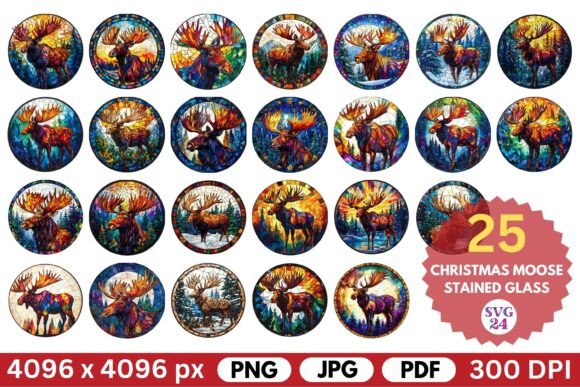
The first thing that strikes you about the Christmas Moose Stained Glass design is its architectural quality. Unlike traditional fill-heavy designs that can look bulky on garments, this piece utilizes sharp lines and distinct color zones. The mood is nostalgic yet sophisticated, evoking the warmth of a winter evening seen through a church window or a cozy cabin pane. The layout is balanced, with the moose’s antlers providing a natural frame that draws the eye upward. For a craft business owner, this visual personality is a significant asset. It moves beyond simple "cute" into the realm of decor-worthy art, making it suitable for higher-end boutique products rather than just quick novelty items.
The detail level is moderate but precise. In the context of digital embroidery file evaluation, this means the design likely relies heavily on satin stitches for the "lead" lines and fill stitches for the colored "glass" panels. This combination creates a tactile contrast that adds depth to the finished product. However, this complexity demands respect during the stitching process. It is not a design you can rush. It requires careful planning regarding thread colors and fabric choice to ensure the stained-glass effect remains clear and does not become a muddy mess of overlapping threads.
Real-World Application: From Concept to Finished Product
To truly evaluate the Christmas Moose Stained Glass design, I imagined a real-life scenario: preparing a custom order for a client who wanted a unique holiday gift. I chose a heavy-weight canvas tote bag as the base. This tote bag design application is ideal because the sturdy fabric supports the weight of the stitching without puckering. The rigid structure of the bag allows the geometric lines of the stained glass motif to stand out sharply. When stitched, the design acted as a focal point, transforming a plain utility item into a festive accessory that customers would be proud to carry.
Beyond tote bags, this design shines in sweatshirt embroidery. Placed on the left chest or as a larger back piece, the moose motif adds a touch of whimsical elegance to holiday loungewear. The key here is scale. On a sweatshirt, the design needs to be large enough for the color blocks to be distinct. If scaled down too much, the intricate "glass" panels might merge, losing the intended effect. I also considered its use on pillow covers for home decor. Here, the design benefits from the static nature of the fabric, allowing for dense stitching that creates a luxurious, textured look reminiscent of actual tapestry work.
For Etsy sellers and handmade shop owners, this design offers versatility. It works beautifully as an embroidered patch that can be ironed onto jackets or hats, extending its lifecycle beyond a single garment. This modularity appeals to buyers looking for customizable options. Furthermore, the design’s strong visual identity makes it excellent for printable mockup creation. High-quality previews are essential for online sales, and the high-contrast nature of this stained-glass style photographs well, helping to drive buyer engagement and trust.
Navigating Technical Challenges and Fabric Constraints
While the Christmas Moose Stained Glass design is visually stunning, it is not without its technical demands. One must be cautious when applying it to textured fabrics or stretchy materials. The sharp lines of the stained-glass effect can distort if the fabric shifts during stitching. Therefore, using the correct stabilizer is non-negotiable. A cut-away stabilizer is recommended for garments that will be washed frequently, while a tear-away might suffice for decorative items like wall hangings. Always test the design on scrap fabric first to gauge how the tension interacts with your specific machine setup.
Another critical consideration is hoop size. Ensure that your hoop can accommodate the full width of the moose’s antlers without cropping. If the design is too large for your standard hoop, you may need to split it, which is generally not advisable for a continuous image like this unless you are experienced in multi-hoop techniques. Additionally, be mindful of stitch density. Areas where multiple color changes occur can build up thickness. On thin fabrics, this might cause puckering or visible pull marks on the reverse side. Using a topping or stabilizing the front of the fabric can help mitigate this issue.
Dark fabrics present a unique challenge for this design. Since the "lead" lines are typically dark, they may disappear against black or navy backgrounds. In such cases, consider adjusting the thread colors to create contrast, perhaps using a metallic or lighter shade for the outlines to maintain the stained-glass illusion. Conversely, on light fabrics, ensure the fill colors are vibrant enough to stand out. Testing the design in black and white mockups can help you assess the contrast and clarity before you even thread your needle.
Enhancing Brand Value and Customer Trust
Incorporating the Christmas Moose Stained Glass design into your product line can significantly elevate your brand’s perceived value. The sophistication of the motif suggests a higher level of craftsmanship, which can justify premium pricing. For commercial embroidery projects, this design conveys professionalism and attention to detail. Customers are more likely to trust a seller who offers complex, well-executed designs rather than simple, ubiquitous clipart. This trust translates into repeat business and positive reviews, which are vital for growth in the competitive handmade market.
Moreover, the design’s versatility supports consistent branding across different product categories. Whether used on baby embroidery items like blankets or on adult apparel, the cohesive visual style helps establish a recognizable brand identity. For creative entrepreneurs, this consistency is key to building a loyal customer base. The design also lends itself well to seasonal marketing campaigns, allowing sellers to create themed collections that feel curated and intentional.
Practical Notes for the Embroidery Designer
Before finalizing any project with the Christmas Moose Stained Glass design, take these practical steps. First, verify the license terms. Ensure that the digital embroidery file permits commercial use if you plan to sell finished items. Second, inspect the file for any unnecessary jump stitches or trims that could slow down production. Clean up the file if necessary to optimize machine efficiency. Third, consider the end-user experience. If the design is for a child’s item, ensure that all edges are secure and that no loose threads remain, as safety is paramount.
Finally, remember that the success of this design lies in the execution. Take the time to select high-quality threads that complement the stained-glass aesthetic. Rayon or polyester threads with a slight sheen can enhance the "glass" effect, while matte cotton threads might offer a more rustic, traditional look. Experiment with different combinations to find what best suits your brand’s voice. By approaching the Christmas Moose Stained Glass design with thoughtful preparation and technical precision, you can create stunning, high-value products that resonate with customers and stand out in the marketplace.