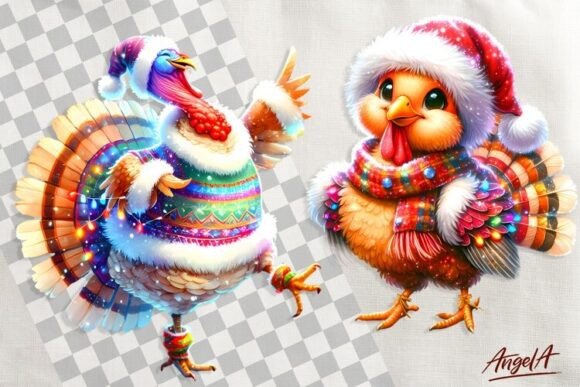
Reviewing Christmas Clipart, Cute Turkey Clipart, for Embroidery
As a designer who spends more time staring at stitch simulations than I do sleeping, I have learned that not every cute graphic translates well to thread. We often browse marketplaces looking for the perfect machine embroidery design, drawn in by bright previews and catchy titles. Recently, I spent some time evaluating a bundle labeled Christmas Clipart, Cute Turkey Clipart, to see if it holds up under the needle. My goal was not just to admire the artwork, but to determine if it is viable for real-world embroidery project applications, from custom client orders to my own small shop inventory.
The first impression of this collection is undeniably cheerful. The illustrations lean heavily into a whimsical, hand-drawn aesthetic. For an embroidery designer, this is a double-edged sword. Whimsy sells, especially in the realm of holiday embroidery and seasonal gifts, but it often comes with complex curves and tiny details that can frustrate even the most advanced machines. When I opened the files, I was looking for clean lines and logical color breaks. The mood here is playful and warm, perfectly suited for items meant to evoke nostalgia or joy, such as a personalized gift for a family gathering or a boutique item for a local craft fair.
Real-World Application: The Holiday Tote Test
To truly understand the value of these assets, I moved beyond the screen and into the studio. I decided to test one of the turkey motifs on a canvas tote bag design. Canvas is a forgiving fabric, offering a stable base for testing stitch density and thread tension. The specific design I chose featured a turkey wearing a Santa hat, a clever mashup of Thanksgiving and Christmas themes that appeals to buyers looking for extended holiday decor.
Stitching out the design revealed several important characteristics. The larger areas of the turkey’s body utilized a fill stitch that was dense enough to cover the fabric texture without causing excessive puckering. However, the edges relied heavily on a satin stitch border. On canvas, this looked crisp and professional. The thread colors suggested in the preview were vibrant, but I found that swapping the standard red for a deeper burgundy gave the finished product a more sophisticated, high-end look. This is a crucial tip for any Etsy seller: do not be afraid to adjust the palette to match your brand identity or current trends.
The reaction from my test group—friends and family who serve as my unofficial focus group—was positive. They appreciated the charm of the character. It did not look like a generic clip-on graphic; it looked like a deliberate handmade product. This distinction is vital for building customer trust. When a buyer sees a clean, well-executed embroidered motif, they perceive higher value. This design, when stitched correctly, contributes positively to that perception.
Navigating Fabric and Hoop Constraints
While the tote bag test was successful, I needed to see where Christmas Clipart, Cute Turkey Clipart, might fail. I moved on to a stretchy cotton jersey for a sweatshirt embroidery project. This is where many digital designs stumble. The intricate details in the turkey’s feathers, which looked charming in the Illustrations preview, became muddy on the textured knit fabric. The running stitch elements used for finer details got lost in the pile of the fabric.
This experience highlights a critical lesson for craft business owners: context is everything. This specific design is not ideal for thin, stretchy, or highly textured fabrics unless you are using a heavy cut-away stabilizer and perhaps simplifying the digitizing. For baby embroidery, where softness is paramount, I would hesitate to use the denser versions of these files directly on onesies. Instead, I would recommend creating an applique design version. By cutting fabric shapes and stitching around them, you reduce the stitch count and bulk, making it safer and softer for infant skin.
Another area of caution is hoop size. Some of the larger composite images in this bundle require a 5x7 or even 6x10 hoop. If you are working with a standard 4x4 machine, you will need to split the design or choose smaller, isolated elements. Always check the hoop size requirements before purchasing or committing to a project. Trying to force a large design into a small hoop by resizing it can distort the proportions and ruin the visual appeal.
Commercial Viability and Brand Consistency
For those of us running small shops, the question of commercial viability is paramount. Does Christmas Clipart, Cute Turkey Clipart, fit into a cohesive brand? If your shop specializes in minimalist, modern aesthetics, these whimsical illustrations might clash. However, for boutiques focusing on rustic, farmhouse, or traditional holiday styles, these assets are gold. They work exceptionally well on embroidered patch projects, which can then be ironed onto jackets, hats, or backpacks. Patches allow you to control the background fabric, ensuring the design always looks its best regardless of the garment it is applied to.
I also tested the design on a dark navy cap. Curved surfaces are notoriously difficult for embroidery. The design held up reasonably well, but the smaller text elements included in some variations of the clipart were illegible. This reinforces the need to inspect small details closely. If a design includes tiny lettering, it is often best to remove it or replace it with a simpler font when stitching on curved or textured surfaces like caps and towels.
Practical Notes for the Serious Stitcher
Before you integrate these files into your workflow, consider these practical steps:
- Test on scrap fabric: Never stitch a new design directly on your final garment. Use scraps of the same material to check tension and density.
- Check contrast: View your design in black and white. If the details disappear in grayscale, they will likely get lost in stitching too.
- Verify licensing: Ensure the digital embroidery file license allows for commercial use if you plan to sell finished items. Terms vary by creator.
- Adjust density: If possible, edit the stitch density in your software. Reducing density slightly can prevent puckering on lighter fabrics.
- Mockup wisely: Use printable mockup tools to visualize the design on different products before stitching, but remember that screens do not show texture.
In conclusion, Christmas Clipart, Cute Turkey Clipart, offers a charming set of design assets for the right projects. It excels in stable, medium-weight fabrics like canvas, denim, and twill. It struggles with fine details on textured knits or curved surfaces without modification. For the small shop product line, it provides a festive, approachable aesthetic that resonates with holiday shoppers. By understanding its limitations and playing to its strengths, you can create finished product items that are not only visually appealing but also durable and professional. Whether you are creating custom apparel for clients or stocking up for the holiday rush, this design bundle is a useful tool, provided you approach it with a designer’s eye for detail and a stitcher’s respect for fabric.